UTCAA Alumni Interview | MAO Yu Lynn Yuan: Be Bold to Create, Be Fearless of Any Voices
- Oct 19, 2024
- 12 min read
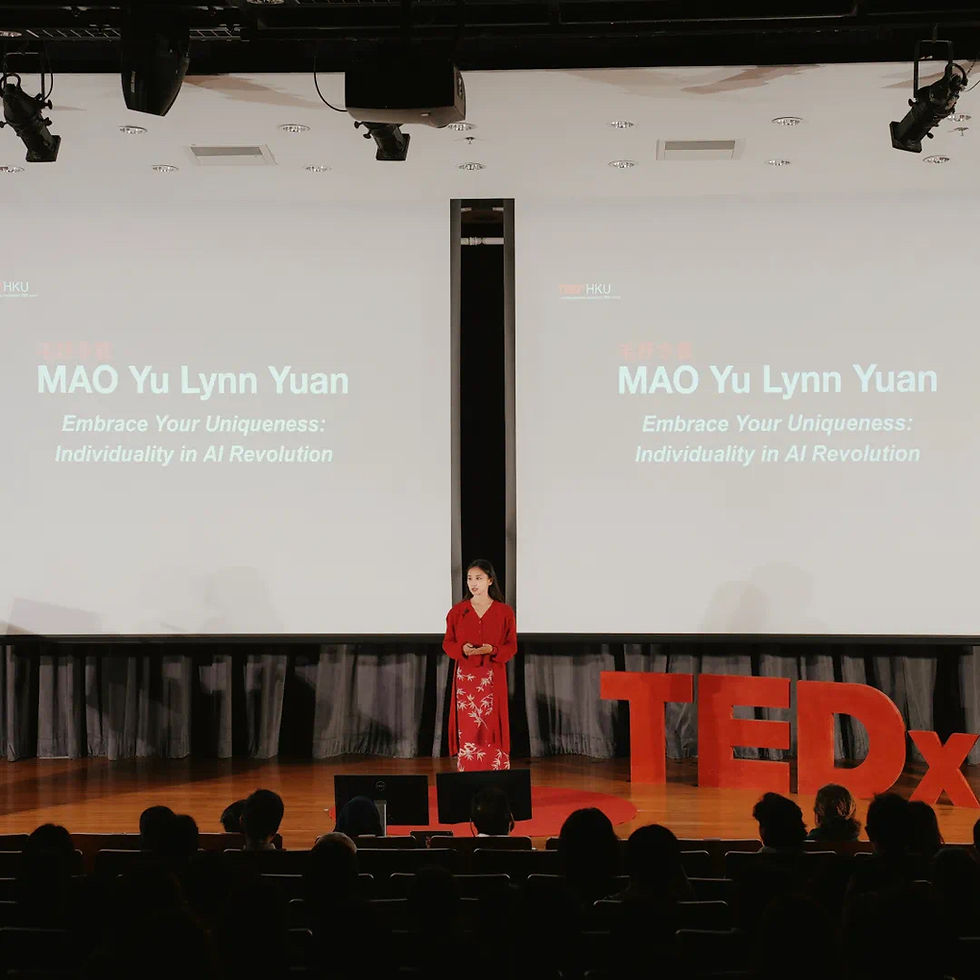
October 20, 2024 (Toronto, Canada) — The University of Toronto Chinese Alumni Association (UTCAA) conducted an in-depth interview with alumni MAO Yu Lynn Yuan, a post-90s filmmaker, director and producer. The conversation covered her cross-cultural educational background, her career transition from venture capital and entrepreneurship to film, and the creative philosophy behind her debut experimental art film Mermaid in the Garden of Escapism. The interview also explored a range of topics including gender equality, the integration of AI technology and art, and the collision of Eastern and Western cultures, revealing the core motto guiding her artistic creation and personal growth, “Be bold to create, be fearless of any voices.”
Born in China, with ancestral roots in Zhejiang and household in Guangdong, MAO Yu Lynn Yuan moved to Canada at an early age. She earned her bachelor’s degree in Arts Management from the University of Toronto and pursued her master’s studies in Sustainable Leadership and Governance at the University of Hong Kong. Her dual Eastern and Western educational background has endowed her with a unique humanistic perspective and creative dimension. Before embarking on her career as a film director, she spent more than a decade deeply engaged in overseas venture capital and entrepreneurship as an entrepreneur, investor, and creative director, spanning industries including art and fashion, real estate and finance, and intelligent technology. Her award-winning debut independent film Mermaid in the Garden of Escapism emerged as a synthesis of her prior business incubation, creative experience and artistic talent. The film has received international accolades including Best First Time Director (Short) at the Vancouver International Movie Awards and Best Canadian Short Film at the Canadian Film Photography Awards, with official selections and nominations at festivals such as the Berlin International Art Film Festival and Cannes Art Film Festival.
During the interview, MAO Yu Lynn Yuan shared her journey of growth and transformation at the University of Toronto, talked how her cross-cultural background has shaped her cinematic practice, and offered advice to emerging artists based on her own journey. Her perspectives on “love as the core of equality” and “AI cannot replace human essence” provide innovative insights into contemporary art creation integrated with AI+ technology, as well as humanistic and social reflection.
Read the full Chinese version of the interview:

About UTCAA
UTCAA is the abbreviation of the University of Toronto Chinese Alumni Association. Founded in 2012, it is the only officially recognized Chinese alumni association at the University of Toronto, and the sole Chinese organization on campus bonded by alumni networks. Its mission is to unite University of Toronto Chinese alumni, serve the university, and support its graduates. It is committed to strengthening connections among Chinese alumni of the University of Toronto worldwide.
The following is an excerpt translated from the Chinese interview.
The UT Chinese Alumni Interview Series is an initiative launched by the University of Toronto Chinese Alumni Association (UTCAA) in 2018, dedicated to featuring prominent Chinese alumni of the University of Toronto, sharing their academic journeys and life insights.

About the Filmmaker
MAO Yu Lynn Yuan is a post-90s film director and producer whose works focus on gender equality, social stratification, and the discourse of Eastern and Western cultures in contemporary society. She was born in China, hailing from Zhejiang ancestry with a Guangdong household registration, and immigrated to Canada at an early age. She earned her bachelor’s degree from the University of Toronto and her master’s degree from the University of Hong Kong. As a Chinese female director shaped by both Chinese and Western education, her unique perspective defines the distinct themes of her creations. Before her debut independent film Mermaid in the Garden of Escapism (as director and producer) won and was nominated for numerous international film festival awards, MAO had accumulated over a decade of experience in overseas venture capital and investment as an entrepreneur, investor, and creative director.
Official Website: www.maoyulynnyuan.com
About the Film
Mermaid in the Garden of Escapism (2024) is MAO Yu Lynn Yuan’s first experimental art film, starring Gloria Gao and Baoguo Huang. Through artistic innovation incorporating AI voiceover, the film advocates gender equality and inspires reflection on individual identity. The film premiered at the Canadian CIFF Film Festival on May 25, 2024. It has won Best First Time Director (Short) at the Vancouver International Movie Awards and Best Canadian Film (Short) at the Canadian Film Photography Awards, and was nominated for official selection at multiple international festivals including the Berlin International Art Film Festival, Cannes Art Film Festival, and Canada-China International Film Festival.
UTCAA: Could you share your study experience at the University of Toronto and how it led to your subsequent career path?
MAO Yu Lynn Yuan: My family originally expected me to pursue a career as a diplomat, but my passion for the fashion industry led me down an unexpected career path. I completed my undergraduate at the University of Toronto, studying Art Management, a program that forged my mindset combining both emotional and rational sides.
My art studies greatly helped me explore the relationship between myself, the world, and the connection between the two. During university years, I once created an art installation: a red high-heeled shoe stepping on an open book, with broken eggs scattered across the pages, and a piano audio play looping in the background. The work explored the relationship between higher education on women and the development of their individuality. This was my first exploration of faminine themes and one of the few works recognized by my art professors. In contrast, business and management studies were more straightforward. You get to do things efficiently from Point A to Point B.
In my third year, I founded my own brand management company, which later expanded into venture capital incubation. My initial startup team mostly hired UT alumni fellows, and over more than a decade, the business has covered across industries, like art and fashion, real estate and finance, intelligent technology, media, and other sectors. I got to balance study and practical work, honing my ability to lead teams independently and incubate projects from 0 to 1.
I live by a principle: before managing any field, I must fully understand it. After more than ten years, I have become somewhat of an all-rounder. My new role as a film director is an unexpected gift of over a decade of creative project experience and my innate artistic talent. Although I already serve as a mentor in commercial venture capital, entering the film industry bring me back to a beginner mindset, free and ready to create everything from scratch.

UTCAA: You studied at the University of Toronto and the University of Hong Kong, two renowned institutions representing Eastern and Western cultures. What unique learning experiences did each offer? How has your cross-cultural background influenced your filmmaking?
MAO Yu Lynn Yuan: I grew up in Canada for nearly 20 years. The University of Toronto was my enlightenment in shaping a worldview through Western education, especially the curriculum of art emphasizing ideas and of management focusing on practice, which fostered my approach of bold innovation paired with solid execution, making me both a dreamer and a doer.
The University of Hong Kong is actually quite Western mindset oriented, with English lectures and many international professors. Yet located in the East, Hong Kong serves as a window bridging China and the world. The foundation of HKU and Hong Kong itself is somewhat rooted in Chinese culture, particularly Lingnan culture.
Coincidentally, I pursued two seemingly contrasting disciplines at HKU: a postgraduate diplomat in financial investment focusing on growth of numbers, and a master study in Sustainable Leadership and Governance centered on social responsibility. My cross-cultural conflicts peaked during the pandemic when I returned to China. Amid the clashes between Eastern and Western values, I reconstructed the worldview that used to form mostly under Western perspective, gaining new insights into womanhood, roots, and self identity, also being as reflections that directly inspired this film.
Running through the film is an 18th-century English poem The Mermaid, narrated by AI voiceover. This romantic poem metaphorizes the fate of most women and the constraints that deprive them of individuality and the ability to love. I translated it into both English and Chinese for the end part as a culmination of metaphorical expression.
Costumes, sets, and props in every scene carry literary metaphors, inviting the audience to project their social context and form a gaze upon the mermaid. Through ironic counter-gaze, the film encourages self-reflection on the diverse psychological projections of women. For instance, audiences often interpret a half-nude mermaid gracefully lying on a tablecloth differently from a male merman in the same context.
This mirrors real life: gender stereotypes constrain both women and men under social gaze. In East Asian contexts, men are often trapped by subjectivity, while women are confined to objectivity. Women are expected to be beautiful, obedient, and fulfill roles as daughters, wives, daughters-in-law, and mothers. Constantly scrutinized, yet never encouraged to become their true selves. Men are pressured to achieve unceasing success, a demand that suppresses them throughout life.
Gender gaze and constraints in East Asian societies are relatively more pervasive and suffocating than in Western societies that prioritize individualism, meanwhile to some extent, creating invisible social class ceilings. And, in relatively poorer or power-concentrated areas, women are valued more for their “functional” objecthood than their subjective self. Many women in their whole life never develop a sense of subjective identity, and those who do often face suppression.
Thankfully, time has changed. The awakening of women is a hallmark of modern civilization, with pioneers like Principle Zhang Guimei in China. Yet progress takes time. Many women are still awakening, and society is evolving to adapt the changes of a new era.
Throughout history, across East and West, few women emerge unscathed from societal judgment. From a governance perspective, extreme feminism or patriarchy that exacerbates gender conflict harms the economies and social stability. Advocating gender equality by strategically balancing gender dynamics and embedding it in laws and policies could offer a solution.
When timing turns right, I may plan to support vulnerable marginalized groups, especially women, in pursuing gender equality through films, educations, and public welfare fundings. And, gender equality is a human right, not a female fight. Strength has no gender.

UTCAA: Gender perspectives may help us rethink gender equality. How has the rapid rise of GenAI shaped our understanding of human values and self-identity in your views?
MAO Yu Lynn Yuan: AI has ushered in Industry 4.0, and the launch of ChatGPT has accelerated the evolution of industrial intelligence globally. My current sustainable development themed research at HKU focuses on AI’s impact on user privacy and information literacy.
As per the art and filmmaking, I embrace AI-driven tech and innovations. Like a double edge sward, a film project once requiring 2,000 people may soon be completed by a core team of 20 plus AI. Yet AI cannot replace humanity, that uncertain, authentic, and complex emotions of unique to humans.
In this film, the actors had no idea what the full plot is. I directed and guided their performance and emotions per scene, with unpredictable outcomes that define art. In contrast, every detail of the AI voiceovers was precisely designed by me as a plan.
The core conclusion of the film’s AI voiceover concept is that the ultimate goal of gender equality is love. Love is what distinguishes and elevates humans above super AI. It is also a theme embodied in the final line of my translated poem:
“我是否愿从海底那虚空的圆满中探出身来,看看那被所有人看低的——我真正的爱。
Would I lean out from the hollow sphere of the sea,
All looking down for the love of me. (Original ENG version)”
Gender equality is neither female supremacy nor male dominance, but a hallmark of a human-centered society. It relies on love, that is pure, universal, and benevolent, transcending both genders, and requires mutual respect among all genders including LGBTQI+ communities.
UTCAA: How might themes like gender equality, classism, and Eastern-Western cultures influence the development of AI from your perspective?
MAO Yu Lynn Yuan: The question is beyond my expertise and profession. If anything, these themes may provide training data for AI to simulate human emotions? But machines remain machines. They are shut down when powered off and can be reprogrammed after errors, unlike humans. Complex, unswitchable, and unrewritable.
I have also found that the beauty of society and consciousness lies in diversity, not utopian harmony. Light and shadow coexist. AI can create perfect beings, but without emotion and humanity, they are not truly human.
UTCAA: What differences do you see between the film industries in Hong Kong and North America? Do women and men have equal opportunities and pay? Have you had distinct experiences?
MAO Yu Lynn Yuan: Each region has its own film ecosystem. Like Oscars in Hollywood, Cannes in France, HKFA in Hong Kong. Every place has a mountain top for people to reach. Meanwhile all of them nurture works and talents rooted in local culture differently. It is evident that Asian or Chinese faces still remain marginalized in Hollywood, and female directors seem to be underrepresented in Hong Kong cinema.
Directors and producers hold proactive roles, like founders of a production team. With a solid script, cast, platform, investment, and audience support, works can be produced and sustained. Success is not determined by budget. Blockbusters may fail, while small productions can become a master piece. Despite who, what and where the team is, to me, a good film is one that borns with the director’s name and dedication and something worth doing it diligently.

“As gender equality is moving into the mainstream, increasingly, so are women. While there is still far to go towards gender parity, the trend is bending in the right direction. Record numbers of women hold political offices and helm major companies.”
— UN Women
UTCAA: AI-generated content is becoming increasingly realistic to the point of being indistinguishable, and most audiences may find it hard to tell apart AI‑created work from human‑made work. How do you think this will impact art and cinema?
MAO Yu Lynn Yuan: This is a part of technological innovation, and I see it as a positive thing. Many pioneering artists and filmmaking teams have adopted AI technology in their work. While it may continue to trigger job replacement across the industry in the medium to short term, in the long run, it will help offset labor shortages caused by the decline in population globally. It also offers numerous benefits to emerging artists and filmmakers with limited budgets, such as cost savings and greater efficiency.
I hand selected six AI voice actresses from LOVO AI, a Silicon Valley tech startup. They are from different countries around the world, speak with distinct regional English accents, and range in age from teens to elderly. They are also among the very few AI voice actors to be credited in IMDb, the world’s authoritative film database, under an AI robot identity through this award-winning film. Most audience members would never guess the voices were AI if not told.
You can choose AI voices for voiceover just like casting human actors. After selecting an AI based on basic attributes such as nationality, gender, age and accent, you can further refine the voice by adjusting its tone, intonation, speed and other vocal details to complete the voiceover. In the end, through post-editing, I combined these distinct female voices into an emotional ensemble. Sometimes harmonious, sometimes chaotic, echoing the theme of gender equality amid the lack of authentic female voices in society, and creating an ironic artistic tension rooted in contrast.
Gloria Gao, the actress who plays the mermaid, and the two male actors portraying the merman and the butcher have no dialogue at all throughout the film.
The deliberate juxtaposition of their emotional performances with the ironic AI voiceover is actually an intentional creative choice of mine.

UTCAA: You mentioned in an English interview: “Commercial films are more like doing a perfect blending of the arts and business, which could be very challenging in the years to come for me to expect.” Could you share stories of balancing art and business? What advice do you have for emerging artists?
MAO Yu Lynn Yuan: As a creator, expression is everything while expression is also often destined to be misunderstood. So you don’t need to take it negative to any different opinions or critiques. The funny thing is, Mermaid in the Garden of Escapism went through three versions: the original cut centered on the mermaid, a second version with the addition of the male merman, and the final cut to which I reshot and added the butcher character.
During the film promotion period, I received reviews from various festivals, nearly all were positive and encouraging. Though one critic was particularly sharp, in elegant yet unsparing language. The critic thoroughly tore apart my original version (“Mermaid” role only), saying that he simply couldn’t make any sense of it at all from a male’s perspective. I found it intriguing, shared it with my mum, and then carefully read every line of his critique. The final film including the second (adding “Merman” role) and third versions (adding “Butcher”role) actually owe much to that negative review and my reaction toward a critique like this. After receiving a few nominations, I asked my PR team to thank the critic on my behalf for his honest feedback. He never replied to us though. Maybe feeling a bit of embarrassment, and I find that cute in some way.
Art and business are contradictory yet unified, much like my dual personalities. I have long specialized in reconciling opposites, a skill built on extensive experience. I hold two MBTIs: INFP for artistic creation and ENTJ for execution. Director Ang Lee is also identifies as INFP. People like INFP hold rich inner worlds, constant inspiration, and keen observation. While others see a flower, I ponder its form and growth. One self creates freely, the other makes dreams into reality with values, which mirroring my dual roles as film director and producer.
Anyways. Be bold to create. Be fearless of any voices. When you’re creating, listen to your heart. When you’re at a producer role, listen to the audience, market, and critiques. You get to coordinate both in different phases. Sometimes that’s with yourself. Sometimes with your team. Sometimes with the market. It may sound a bit abstract. Anyways, go experience everything yourself. Words become clear through your actions.